
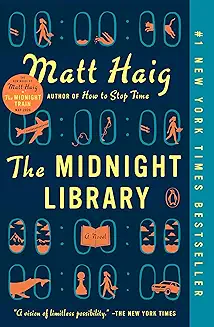
 Book Title: The Midnight Library
Author: Matt Haig
Genre: Literary Fiction / Speculative Fiction
Publisher: Viking
Publication Date: 2020
Review Type: Editorial Review
Reviewer: Johan Pavel
🪶 Review Summary
The Midnight Library is a reflective and concept-driven novel that explores regret, possibility, and the quiet weight of unlived lives through a deceptively simple premise.
Johan Pavel’s review considers the novel’s emotional resonance, its structural design, and the experience it offers readers as they navigate questions of meaning and choice.
✍️ Full Review
At its core, The Midnight Library asks a question that is both familiar and deeply personal: What if you had chosen differently?
The novel follows Nora Seed, a woman suspended between life and death, who is given access to a library containing alternate versions of her life—each book representing a path not taken. It is a premise that leans heavily on philosophical inquiry, yet Matt Haig presents it in an accessible, direct, and emotionally grounded manner.
 One of the book’s most notable strengths is its clarity of intent. The narrative does not attempt to obscure its message beneath complexity. Instead, it invites the reader into a structured exploration of regret, framed through a series of lived alternatives. Each version of Nora’s life functions as both narrative progression and thematic iteration.
This clarity, however, is both a strength and a limitation.
On one hand, the novel’s straightforward prose and deliberate pacing make it widely approachable. Readers are rarely left uncertain about what the story is conveying. The emotional beats are clear, the stakes are defined, and the transitions between lives are handled with consistency.
On the other hand, this same transparency occasionally reduces the sense of discovery. The philosophical conclusions toward which the story moves are often anticipated before they are fully realized. For some readers, this may feel reassuring. For others, it may feel overly guided.
Where the novel succeeds most is in its emotional accessibility. Haig demonstrates a clear understanding of how regret operates—not as a singular feeling, but as an accumulation of small, unresolved questions. The book does not attempt to solve regret. Rather, it reframes it.
Nora’s journey is less about finding the “perfect life” and more about recognizing the impossibility of such a construct.
The supporting concept—the library itself—is handled with restraint. It serves its purpose without becoming overly elaborate. This is not a world-building exercise. It is a controlled environment for introspection.
Readers seeking intricate plotting or unexpected narrative turns may find the structure repetitive over time. However, readers willing to engage with the book as a reflective experience will likely find its rhythm intentional rather than limiting.
Ultimately, The Midnight Library is less concerned with the mechanics of possibility and more concerned with the acceptance of reality.
⭐ Notable Strengths
• Clear and accessible philosophical premise
• Emotionally grounded exploration of regret
• Consistent narrative structure that supports thematic focus
👥 Considerations for Readers
This book may especially appeal to readers who enjoy:
• Reflective, introspective storytelling
• Philosophical themes presented in accessible form
• Character-driven narratives focused on emotional growth
Readers looking for highly complex plotting or subtle thematic ambiguity may find the narrative more direct than expected.
🧭 Final Assessment
The Midnight Library offers a thoughtful and approachable meditation on choice, regret, and the quiet possibility of self-acceptance. It is a worthwhile read for those drawn to reflective fiction, particularly readers interested in stories that prioritize meaning over narrative complexity.
📌 Disclosure
This review reflects Johan Pavel’s independent editorial opinion. Receipt of a review copy does not guarantee a positive review.