
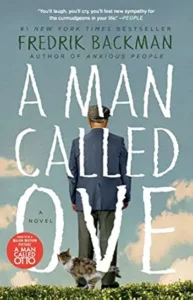
 Book Title: A Man Called Ove
Author: Fredrik Backman
Genre: Literary Fiction
Publisher: Atria Books
Publication Date: 2012 (English translation 2014)
Review Type: Editorial Review
Reviewer: Johan Pavel
🪶 Review Summary
A Man Called Ove is a character-driven novel that explores grief, routine, and the quiet persistence of human connection through a narrative that balances restraint with understated warmth.
Johan Pavel’s review considers the novel’s tonal balance, its structural use of memory, and the experience it offers readers drawn to stories of gradual emotional change.
✍️ Full Review
There are novels that move through plot, and there are novels that move through people.
A Man Called Ove belongs firmly to the latter.
Fredrik Backman introduces Ove as a man defined by routine, order, and a rigid sense of how the world ought to function. His interactions are brief, often brusque, and shaped by a consistent resistance to change. At first glance, the character appears narrowly drawn—more symbol than person.
This initial impression is deliberate.
The novel’s structure relies on contrast: between how Ove presents himself and how his history gradually reframes that presentation. Backman unfolds this history in measured intervals, using flashbacks to reveal the experiences that have shaped Ove’s habits, his expectations, and his distance from others.
These shifts are not abrupt. They accumulate.
What begins as a portrait of isolation becomes, over time, a study of loss and continuity. The routines that define Ove are not simply preferences; they are stabilizing mechanisms, constructed in response to absence. This framing allows the novel to move from surface-level characterization toward something more considered.
The tone is carefully managed.
Backman blends moments of humor with quieter passages of reflection, creating a balance that prevents the narrative from settling too firmly into either sentimentality or detachment. The humor often arises from Ove’s rigidity—his literal interpretation of rules and expectations—while the reflective elements emerge through memory and interaction.
At times, the emotional direction of the story is clear in advance. The novel signals its intentions early, and the arc toward connection is not concealed. For some readers, this predictability may reduce the sense of narrative tension.
However, the strength of the book lies less in what happens and more in how it unfolds.
The pacing is deliberate, allowing relationships to develop gradually. The secondary characters—particularly those who disrupt Ove’s routines—serve as catalysts rather than focal points. They introduce change not through confrontation, but through persistence.
This approach reinforces the novel’s central idea: that transformation often occurs through repeated, ordinary interactions rather than singular, dramatic events.
Backman’s prose supports this structure. The language is accessible, with a rhythm that mirrors the steadiness of Ove’s routines. There is little stylistic ornamentation, which allows the emotional shifts to emerge through context rather than emphasis.
For readers seeking complex plotting or thematic ambiguity, the novel may feel straightforward. Its focus is narrow, and its conclusions are not obscure. Yet this clarity is consistent with its purpose.
A Man Called Ove is not attempting to surprise. It is attempting to observe.
⭐ Notable Strengths
• Strong character-centered narrative with gradual development
• Effective use of contrast between present behavior and past experience
• Balanced tone combining understated humor and emotional depth
👥 Considerations for Readers
This book may especially appeal to readers who enjoy:
• Character-driven storytelling
• Narratives exploring grief, routine, and connection
• Gradual emotional development rather than plot-driven tension
Readers seeking complex narrative structure or unexpected thematic shifts may find the story more predictable than exploratory.
🧭 Final Assessment
A Man Called Ove offers a measured and quietly affecting exploration of character, loss, and the persistence of connection. It is particularly well-suited for readers who value steady, reflective storytelling grounded in human behavior and change over time.
📌 Disclosure
This review reflects Johan Pavel’s independent editorial opinion. Receipt of a review copy does not guarantee a positive review.